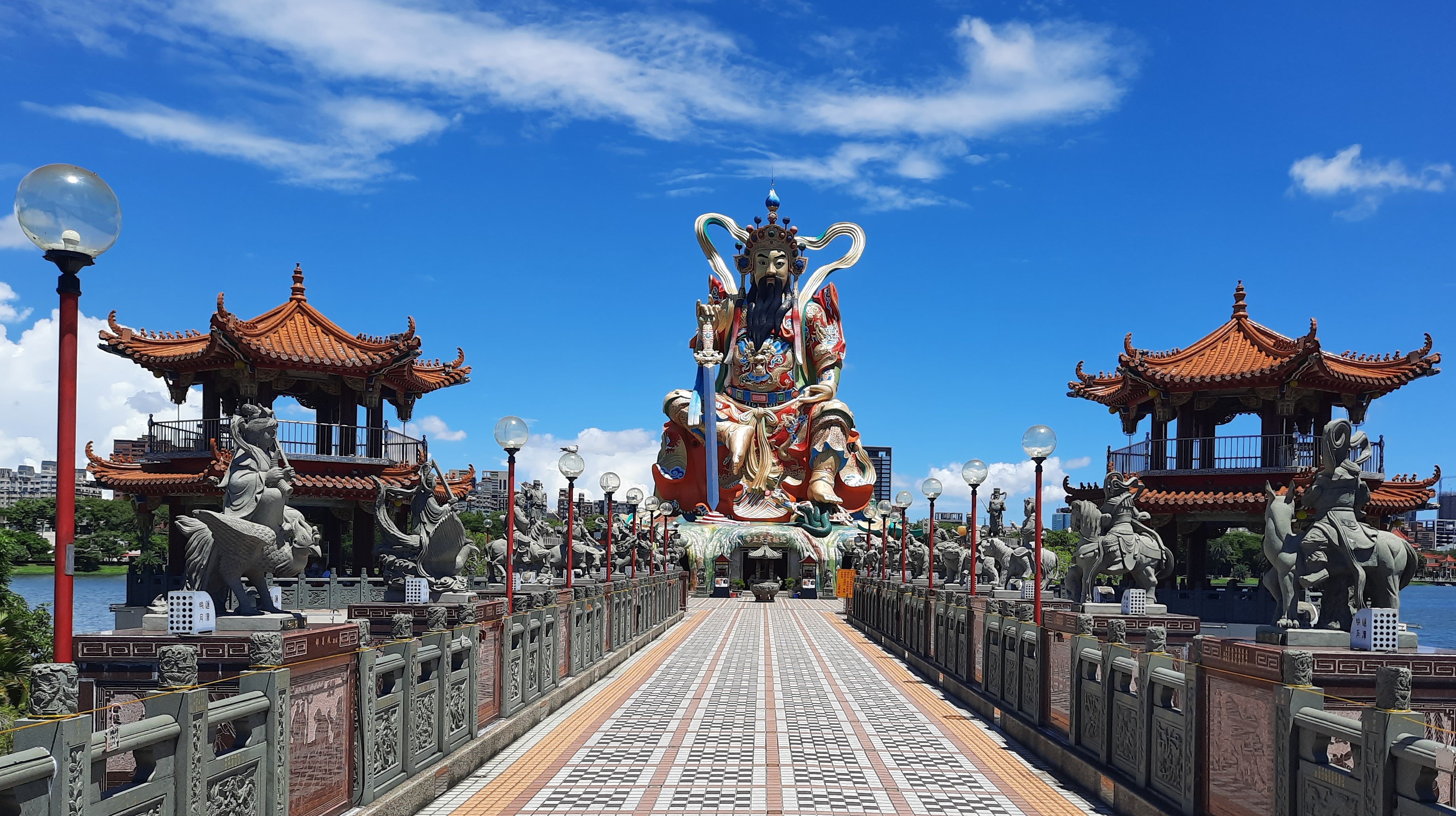
Lotus Pond 蓮池潭 Some visitors adore this 1.3km-long lake and the colourful shrines and pagodas that surround it; others find it all a bit kitschy. Most of the pond’s landmarks are near its southern end, a 5.6km drive/ride from Kaohsiung Main Station and easily reached by train to Zuoying TR station (not Xinzuoying where the HSR stops). Each hour there are two or more services from Kaohsiung Main Station (13mins; NTD22). Make your way to the Dragon and Tiger Pagodas 龍虎塔 (open: 08.00–18.00 daily; free) and the Spring and Autumn Pavilions 春秋閣 (open: 06.00–21.00 daily; free); by the time you read this, renovations at both sites should be complete. At the former it’s customary to go in via the dragon’s mouth and leave by the tiger’s jaws.
One of the city’s most appealing places of worship is just across the road from the latter. Chi Ming Tang 啟明堂 (open: 05.00–21.00 daily) has a statue of Guan Gong in the main chamber, recognisable by his burgundy complexion. Upstairs dead-centre, there are two representations of the Jade Emperor; one has a carmine face, the other is as pale as a Celt. The goddess to the left of him, the Golden Mother, aka the Queen Mother of the West, is believed to dispense prosperity, longevity and eternal bliss.
Instead of going all the way around Lotus Pond, your time is better spent climbing the hillock directly south of the water. From the clearly signposted Old Fongshan City Wall Historic Route 鳳山縣舊城見城之道 you’ll get views over the pond and restored sections of ramparts erected in 1826. After 1949, the land within the walls was occupied by soldiers evacuated from the mainland and their dependents. Some of the latter still live there in a neighbourhood that’s decaying but safe to explore. If you’re really curious about the area’s past, step into the semi-bilingual Center of Old Fongshan City History 見城館 (open: 11.00–17.00 Tue–Fri; NTD49/29) near the southern end of the historic route, 800m on foot from Chi Ming Tang.

